2 Jul 2026
How State Licensing Frameworks Influence Niche Prop Markets Across US Sportsbooks
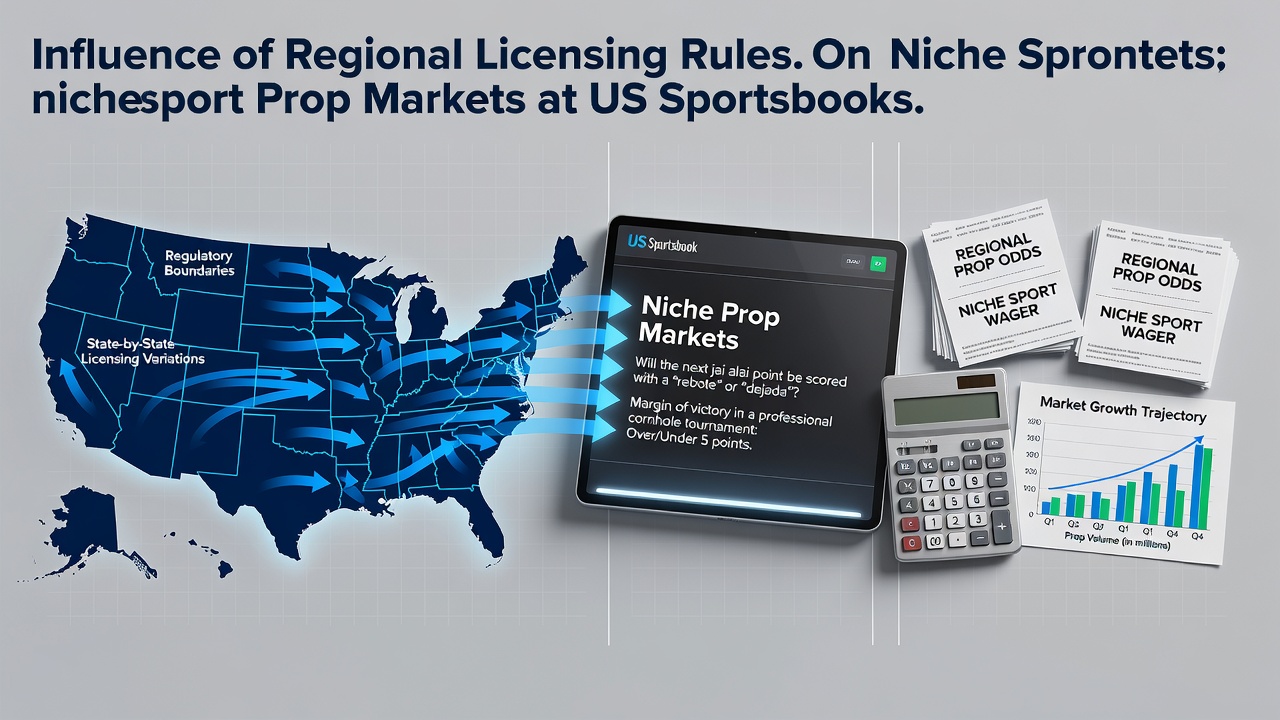
State licensing rules create distinct boundaries for what sportsbooks can offer in prop markets, and those boundaries become especially visible when operators expand into niche sports such as tennis, golf, soccer, and combat sports. Each jurisdiction sets its own criteria for event approval, data-source requirements, and risk-management thresholds, so the same prop bet on a tennis player’s ace count may appear in one state while remaining unavailable in another. Observers note that these differences emerged rapidly after the 2018 Supreme Court decision lifted the federal ban, leaving individual legislatures and gaming commissions to draft their own frameworks.
Core Licensing Variables That Affect Prop Availability
Most state statutes require sportsbooks to partner with licensed data providers before they list any prop market, yet the definition of an “approved data provider” varies. New Jersey’s Division of Gaming Enforcement maintains a short list of official league partners, whereas states such as Pennsylvania and Michigan accept a broader range of independent statisticians. Because niche sports often lack the comprehensive play-by-play feeds that major leagues supply, operators in stricter jurisdictions simply cannot meet the data threshold and therefore omit those props entirely. In July 2026, updated guidance from several commissions clarified that any new tennis or golf prop must include at least three independent verification sources, further narrowing the menu in states that enforce the rule.
Regional Examples of Prop Market Differences
Take one operator that holds licenses in both New Jersey and Arizona. In New Jersey the same platform displays over 120 soccer player props on a typical Premier League weekend, while the Arizona version shows roughly half that number because Arizona’s rules mandate live official scoring confirmation for every market. Data from the American Gaming Association indicates that states adopting the stricter standard see a 35 percent reduction in niche-sport prop volume compared with states that permit supplemental data feeds. Bettors who travel or maintain accounts across borders frequently notice that a prop on a golfer’s fairway accuracy appears only after the state line changes.
Another pattern surfaces in combat sports. Nevada’s Gaming Control Board permits detailed round-by-round props for UFC events because the state’s longstanding boxing regulations already cover similar metrics. In contrast, Illinois requires each new prop type to undergo a separate 30-day review period, so some UFC markets reach Illinois bettors weeks after they debut elsewhere. Researchers at the University of Nevada’s gaming studies program documented these staggered rollouts in a 2025 working paper, showing that time-to-market differences directly correlate with the number of approved data vendors per state.
Impact on Market Depth and Liquidity
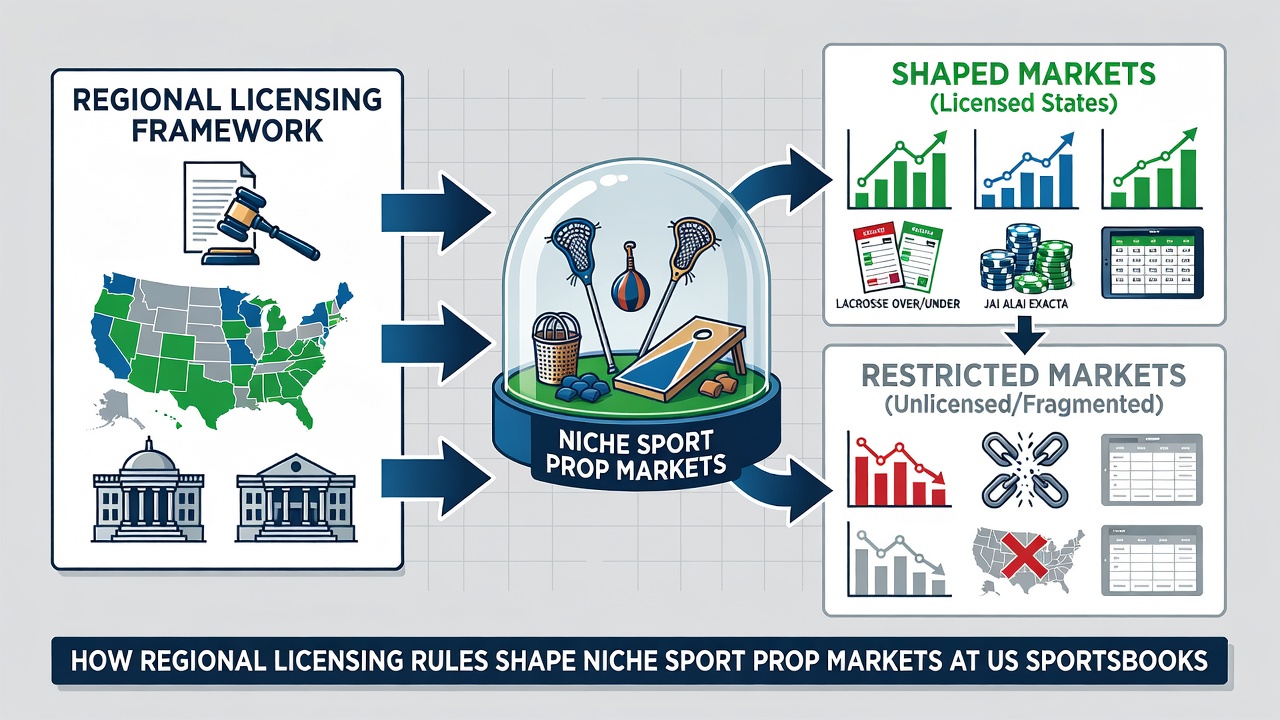
Shallow markets in heavily restricted states produce wider margins and lower limits, which in turn reduces sharp action. When limits sit below $500 on a tennis set-winner prop, professional bettors move their volume to states where limits reach several thousand dollars. Sportsbooks respond by routing larger wagers through risk-management hubs located in more permissive jurisdictions, a practice that further concentrates liquidity in states with lighter data rules. Figures released by the National Council on Problem Gambling in early 2026 showed that states with the broadest prop menus also recorded the highest percentage of bets placed on niche sports, suggesting that availability itself drives participation.
Future Adjustments and Operator Strategies
Operators continue to lobby for standardized data requirements across states, arguing that uniform rules would expand niche markets without increasing regulatory risk. Some commissions have begun pilot programs that accept blockchain-verified scoring feeds as a supplemental source, potentially easing the data bottleneck for golf and tennis props. As of July 2026, three additional states are evaluating similar pilots, which could gradually align prop offerings if the trials prove reliable. Those who track regulatory filings note that any harmonization effort will still leave room for state-specific restrictions on event types, such as amateur matches or exhibition contests, so complete uniformity remains unlikely.
Conclusion
Regional licensing rules continue to fragment the niche-sport prop landscape at US sportsbooks, with each state’s data standards, approval timelines, and limit policies shaping what appears on the board. The resulting patchwork creates measurable differences in market depth, bettor behavior, and operational strategy, patterns that industry reports and academic studies have tracked since widespread legalization began. As more states refine their frameworks, the contours of available prop markets will keep shifting along the same state-by-state lines that define the current environment.