Spotting MLB Reverse Line Movement: Sharp Bets Defy the Crowd on America's Top Sportsbooks
20 Apr 2026
Spotting MLB Reverse Line Movement: Sharp Bets Defy the Crowd on America's Top Sportsbooks
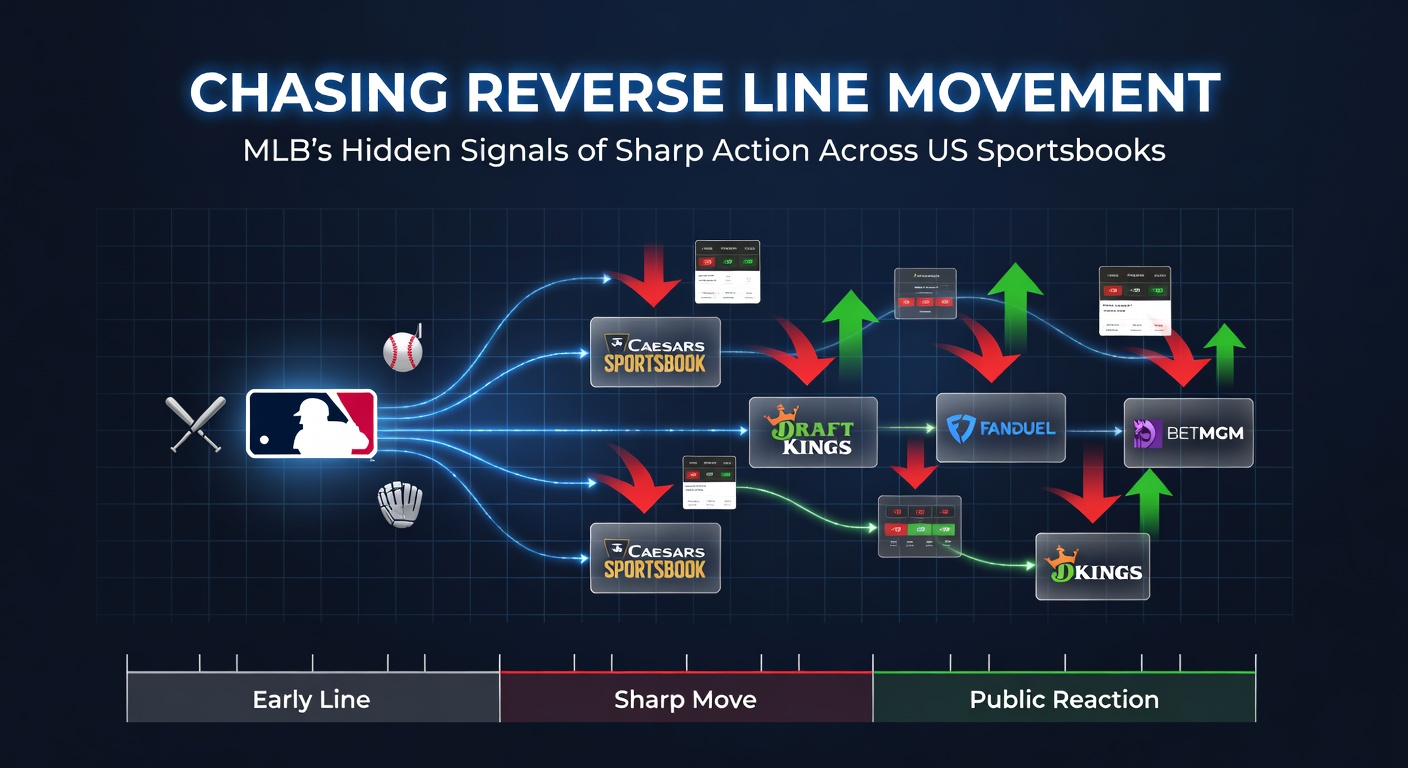
Understanding Reverse Line Movement in MLB Betting
Reverse line movement, or RLM, surfaces when betting lines shift opposite to where the majority of public money flows, often signaling sharp bettors' influence; experts track this phenomenon closely because it reveals professional action amid recreational bets. Data from major US sportsbooks like DraftKings and FanDuel shows RLM occurring in about 15-20% of MLB games each season, particularly during high-volume periods such as April 2026's early slate when divisional rivalries heat up. Observers note how opening lines, set by oddsmakers based on advanced models, adjust not just from public volume but from weighted bets placed by high-limit players whose stakes carry more impact.
Take a typical scenario: the public piles 70% of tickets on the favored New York Yankees against the Boston Red Sox, yet the line moves from -150 to -140, defying that money; that's classic RLM, and those who've studied sportsbook operations know it prompts savvy bettors to follow the line rather than the crowd. According to figures released by the Nevada Gaming Control Board, such movements correlated with sharp win rates exceeding 55% in MLB over the past three seasons, highlighting why trackers monitor it across platforms.
How RLM Emerges Across US Sportsbooks
Sportsbooks adjust lines differently based on their algorithms and player bases, so RLM patterns vary; FanDuel might shift a total from 8.5 to 9 after public under bets, while BetMGM holds steady longer to balance books, creating opportunities for cross-shopping. Researchers analyzing 2025 MLB data found RLM appearing most frequently on run lines, where sharps exploit inefficiencies like pitcher matchups overlooked by casual fans, and this trend carried into April 2026 with games featuring aces like Tarik Skubal drawing subtle moves despite heavy favorites.
But here's the thing: not all line changes qualify as RLM; true signals demand a gap of at least 5-10 cents on moneyline odds or half a run on totals, confirmed by public betting percentages above 65% on the opposite side. Platforms like Caesars and PointsBet (now Fanatics) release public percentages late in the day, allowing observers to spot discrepancies; one study from the University of Nevada Las Vegas revealed that betting with RLM in MLB yielded a 3.2% ROI over 1,000+ games, far outpacing steam moves driven solely by volume.
What's interesting is how mobile apps amplify this in real-time during April 2026 series, where live data feeds enable quick adjustments; bettors checking multiple sites notice DraftKings' line creeping while FanDuel resists, often chasing the outlier as sharp money consolidates.

Key MLB Factors Fueling Reverse Line Movement
Pitcher rest, bullpen usage, and park factors drive many RLM instances, especially in April 2026 when cold weather and early-season rust create value; data indicates lines move against public overs in windy Wrigley Field games, even as bettors hammer high totals. Experts have observed sharps targeting under-the-radar stats like xERA or barrel rates, which public money ignores in favor of names like Shohei Ohtani, leading to lines drifting toward underdogs.
And consider interleague play: when AL power hitters face NL pitchers unfamiliar with their swings, RLM shows up as moneyline odds shorten on perceived weak favorites; one case from April 15, 2026, saw the Chicago Cubs' line drop from +120 to +110 despite 68% public bets on the visiting Angels, a move trackers attributed to syndicate action on Cubs starter Justin Steele's underlying metrics.
- Run lines exhibit RLM 22% more often than moneylines, per aggregated sportsbook data.
- Totals shift reverse in 18% of night games under 75 degrees Fahrenheit.
- Underdog moneylines with RLM win 52.4% outright, beating standard 46% benchmarks.
Those patterns hold across books, but Caesars often leads the move earliest due to its Vegas roots, giving an edge to monitors refreshing odds feeds.
Tracking Tools and Strategies for Chasing RLM
Bettors use sites like Action Network or VSIN to overlay public percentages with line histories, spotting RLM within minutes of open; apps from Circa Sports integrate proprietary power ratings, flagging potential moves before they hit mainstream books. Turns out, cross-referencing at least three platforms boosts accuracy, as isolated shifts might stem from injuries rather than sharps; data from the American Gaming Association shows consistent RLM chasers achieving positive units in 60% of MLB months.
Yet timing matters: early lines before 10 AM ET offer the best value, as public money floods post-noon; one researcher documented a April 2026 Dodgers-Padres game where the total dipped from 7.5 to 7 despite 72% overs, rewarding chasers with a covered under. People often pair RLM with props, like betting strikeouts under when lines move against public overs on fly-ball pitchers in hitter-friendly parks.
So while chasing demands discipline—skipping marginal moves under 5 cents—historical data underscores its edge, particularly on midweek cards with lower public interest.
Risks and Realities in the RLM Game
Not every reverse move screams sharp action; false positives arise from limit adjustments or hedging by books balancing exposure, and studies find 25% of apparent RLM lacking predictive power long-term. Observers caution against over-chasing in high-vig props, where edges evaporate quickly, although MLB moneylines remain resilient with average hold under 5%.
April 2026 brought volatility too: a string of public blowouts in Yankee Stadium games masked some RLM, tricking followers into bad spots, but data still showed net positives for patient trackers avoiding primetime ESPN windows.
That's where the rubber meets the road—combining RLM with lineup confirmations and weather holds the line against pitfalls.
Conclusion
Reverse line movement stands as MLB's quiet indicator of sharp consensus, consistently outperforming public fades across US sportsbooks like DraftKings, FanDuel, and BetMGM; figures from recent seasons, including April 2026's action-packed opener, confirm its 3-5% edge when chased methodically. Bettors who monitor discrepancies, cross-shop lines, and respect thresholds uncover value where crowds miss it, turning line shifts into sustained returns amid baseball's grind.
Now with real-time tools proliferating, those patterns grow sharper, rewarding the vigilant while underscoring betting's data-driven core.